



In partnership with Adobe Acrobat, we’re opening up our reporting. Using PDF Spaces, you can dig into original documents, research, and source material—so you can follow the story the same way we do.
It’s hard to wrap your mind around the scale of the American drug problem.
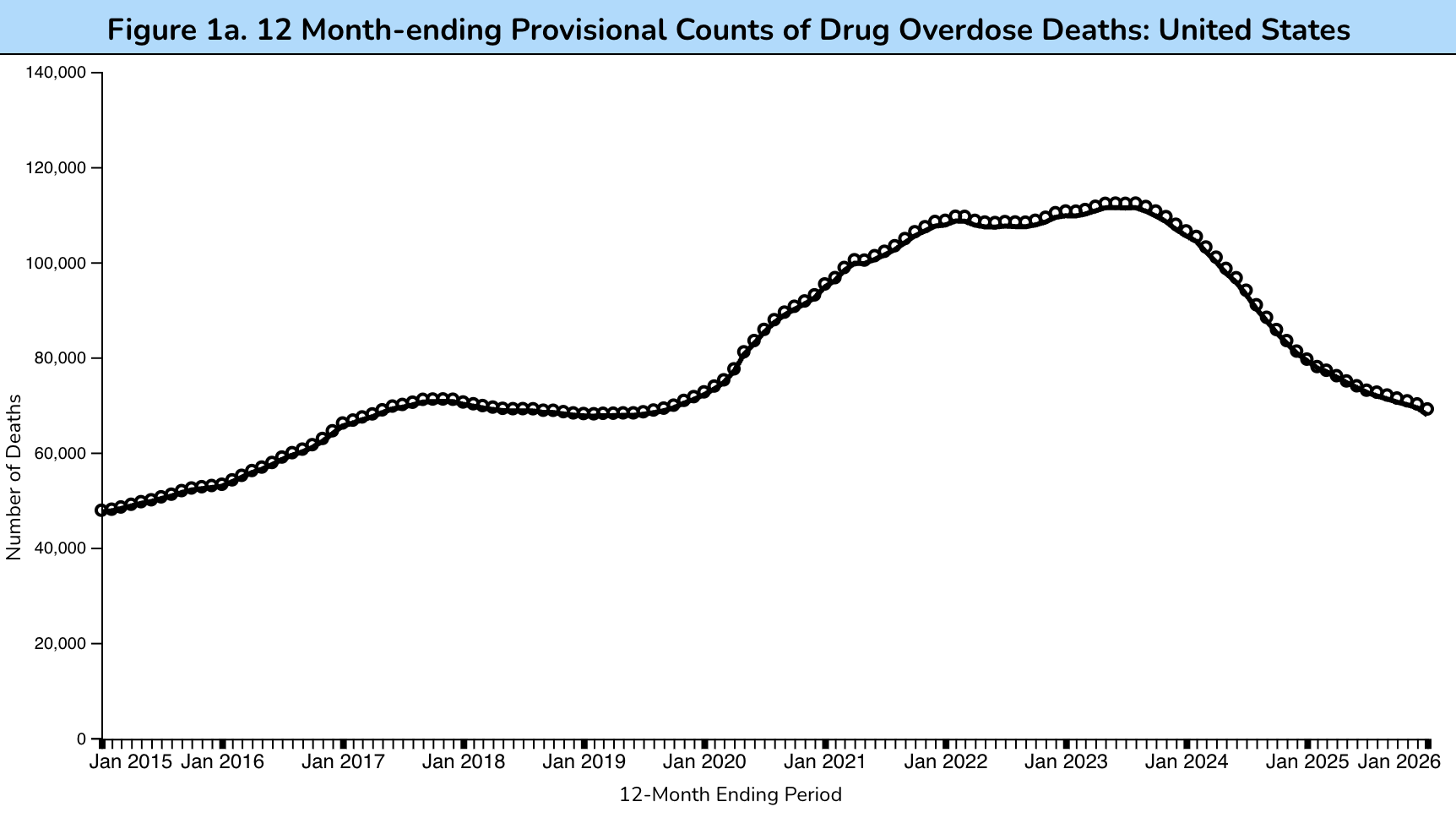
In 2022, 111,000 people in the United States died of drug overdoses. In 2023, it was 113,000. To put that in perspective, over the entire eight years of the Vietnam War, 58,000 American soldiers were killed. These were the depths of the North American opioid crisis, and the nation faced predictions that if current trends continue, 1.2 million people could die by the end of the decade.
But something unexpected happened in 2024: the number of overdose deaths fell to 87,000, a drop of 24 percent. In 2025, the number collapsed further to 69,973.
Only in the dismal world of American drug policy could a shift from two Vietnams-a-year, to just over one, be considered a success. But while people celebrated the rare bit of good news–the question no one can still seem to answer is, why is this happening?
As usual, many different parties—politicians, law enforcement officials, public health advocates—have all rushed to claim the success as their own, offering a series of claims and counter-claims—none of which are really convincing.
The first proposition is that the reduction in drug deaths in the U.S. was actually the result of brilliant international political maneuvering with the old rival, China.
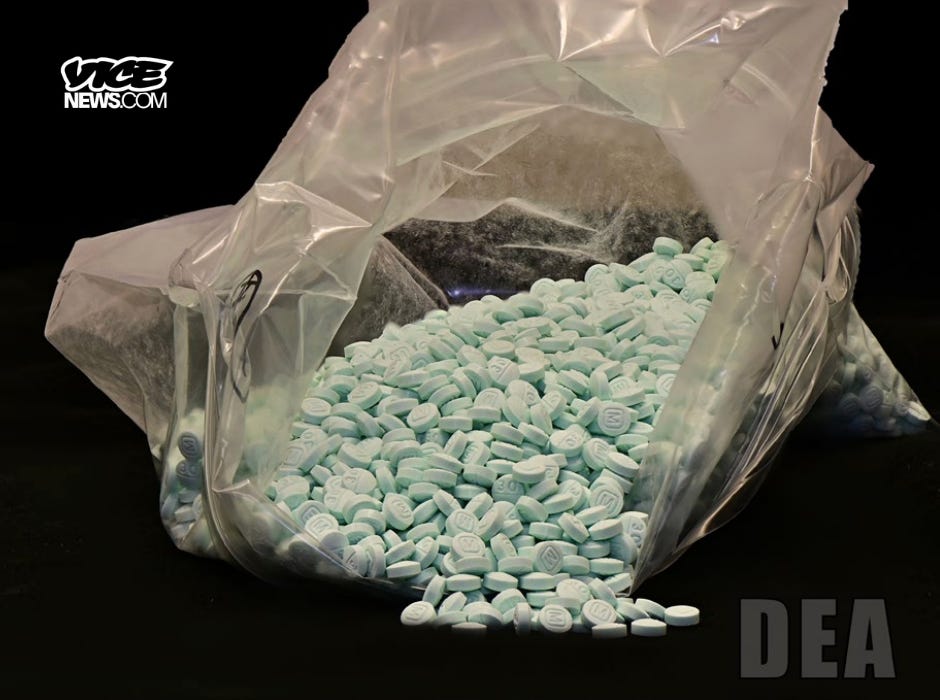
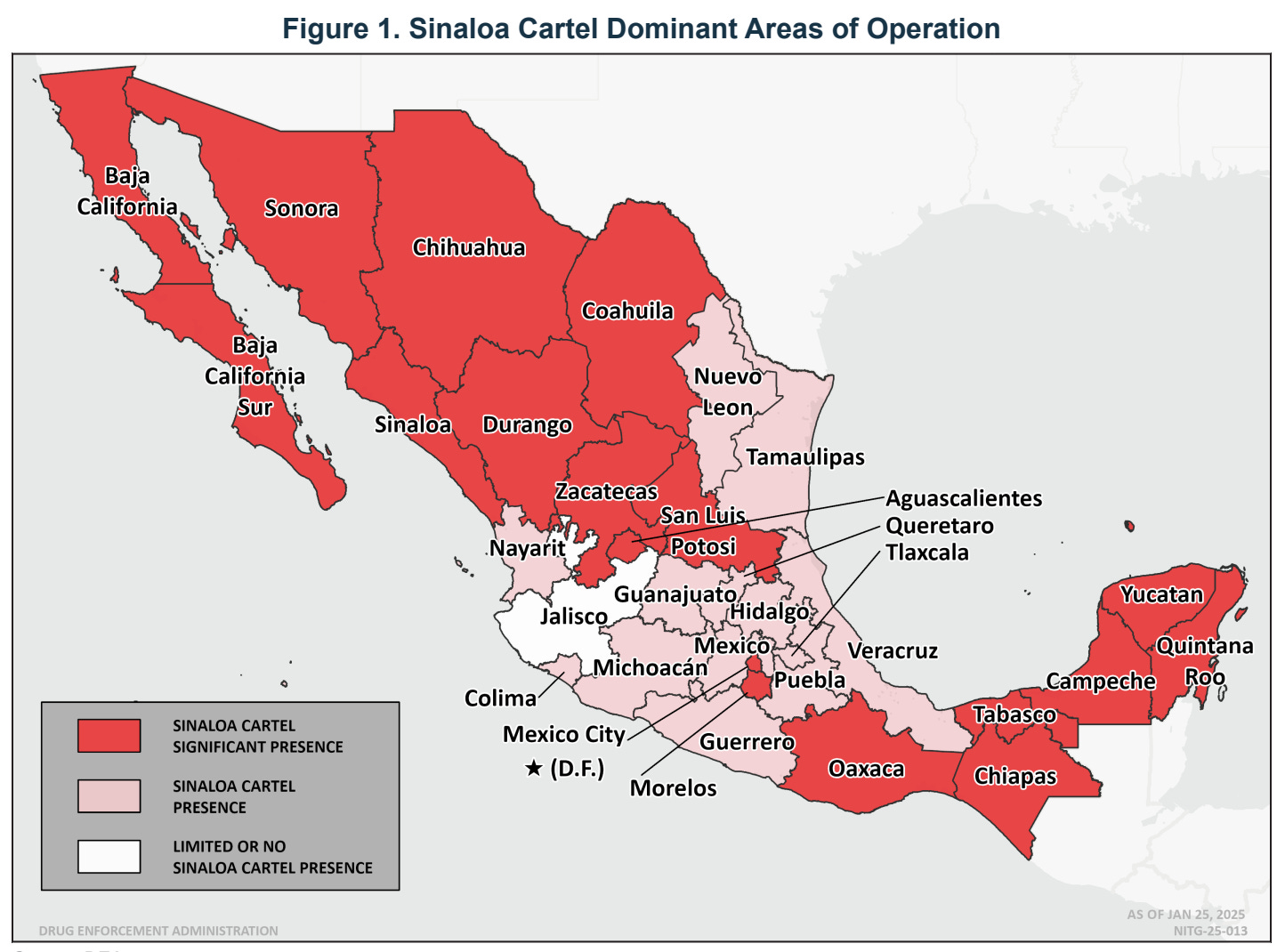
Now, most of the surging fatalities over the past few decades have been driven by fentanyl, a synthetic opioid roughly 50 times stronger than heroin. Fentanyl and its precursor chemicals were often synthesized in Chinese labs then smuggled into North America by Mexican drug cartels. This has led various law enforcement figures to make wild claims that China and Mexico are waging “chemical warfare” on the U.S.
The Former Acting Administrator of the DEA, Derek Maltz, testified before Congress in 2023, saying that, “Fentanyl is a chemical weapon, and the narco-terrorists in Mexico are destroying our country.” President Trump regularly uses the drug as an excuse to ramp up his tariff wars with China. In December 2025, he formally designated fentanyl as a weapon of mass destruction.
But in fact, since the Obama administration, every U.S. president has tried to forge narco-enforcement cooperation with China. It was the Biden administration who helped coordinate a massive crackdown on Chinese labs beginning in late 2023.
Since then, China says it has shut down over 286 companies involved in the trade, prosecuted hundreds of individuals, and scrubbed thousands of websites selling fentanyl and precursor chemicals. This roughly coincided with a drop in U.S. fentanyl purity reported by the DEA. In 2023, 70 percent of the fentanyl pills the agency tested contained a lethal dose, but in 2024 that dropped to only 50 percent.

It is tempting to celebrate this as a massive victory for diplomacy and cooperation, but the often-repeated idea that it was Chinese crackdowns that led to reduced drug deaths has serious flaws. For starters, the dates simply don’t line up.
Vanda Felbab-Brown, Senior Fellow at the Brookings Institution, notes that ”Starting in late November 2023, cooperation between China and the U.S. goes from zero, to say, four or five out of ten…but deaths already started dropping in May 2023. So you have a year, or at least eight months, where you cannot attribute the drop to China.”
This explanation also fails to account for how uniquely adaptable cartel supply chains are. Back in 2019, when China first moved to ban fentanyl, cartels simply started ordering precursor chemicals and making it themselves. If they wanted to source these precursors now, there are plenty of places to find them, for example, India’s chemicals industry.
As Diane Goldstein, executive director of Law Enforcement Action Partnership (LEAP) observes, “This is not hard stuff to come by…We’ve seen the global drug supply chain across the world, and how the drug trafficking organizations already have systems in place and are able to quickly change their production lines.”
OK, so, if the dramatic drop in US drug deaths isn’t down to Chinese diplomacy, what could it be?
Well, many within US law enforcement are eager to claim all the credit for falling drug deaths for themselves. DEA Administrator, Anne Milgram, asserts that, “The cartels have reduced the amount of fentanyl they put into pills because of the pressure we are putting on them.”
However, while there have been reports of certain factions within the Sinaloa Cartel putting out warnings to their cooks to reduce fentanyl production, many believe this is largely performative. Neil Woods, an International Speaker for LEAP, said, “This is a smokescreen…Just because one organized crime figure, or one clique, wants to publicize that they’re not going to produce fentanyl, it makes no difference to the broader market, because the market is massive and demand will be met.”
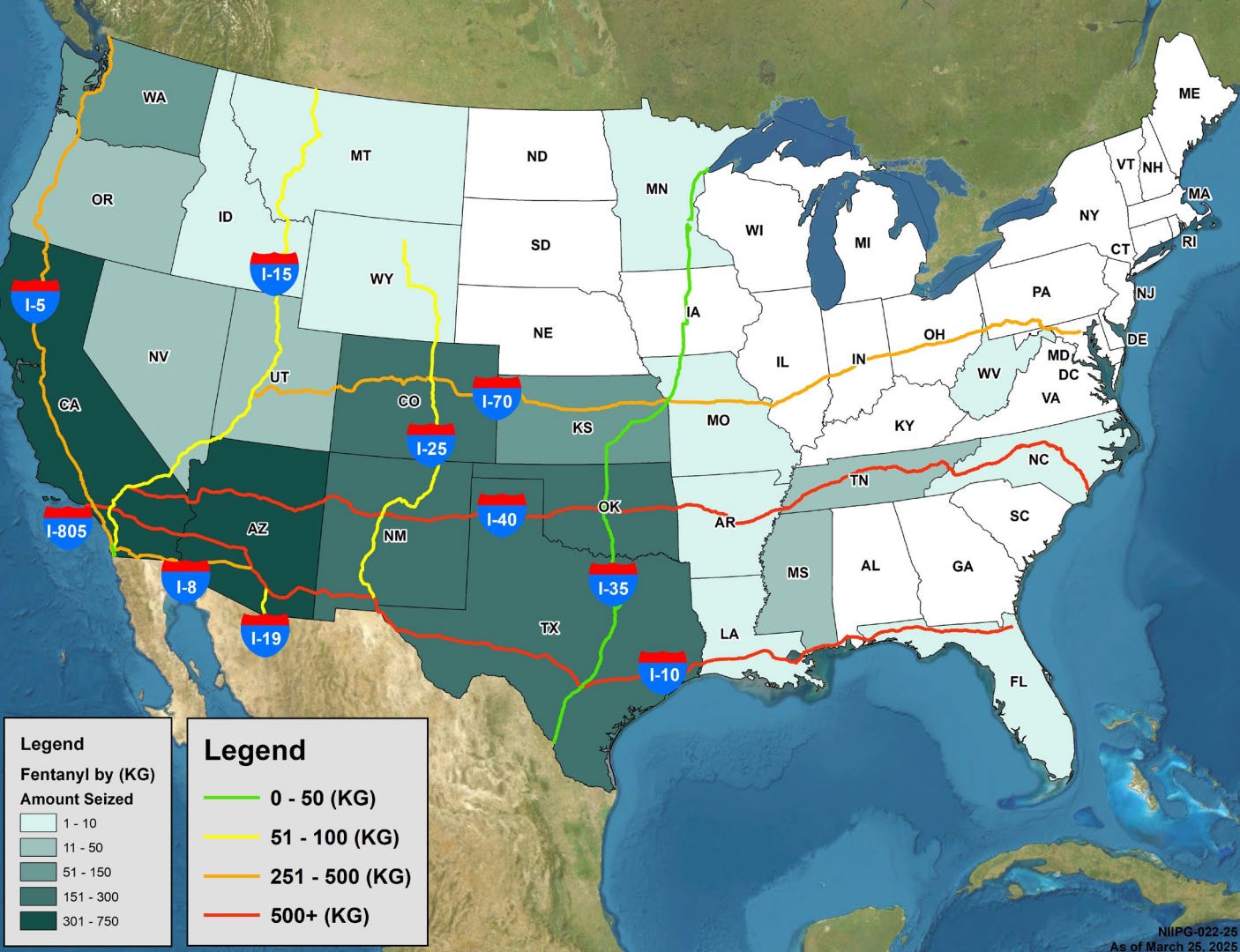
If the drop in deaths over the past few years was caused by less fentanyl coming into America overall, one would expect to see a fall in deaths across the country. But in fact, there are deep discrepancies between states and among marginalized minority groups. Drug deaths in Native American communities continue to run over double the national average. In Maine, overdoses dropped 20 percent among white residents between 2022-2023, but surged a horrifying 40 percent among Black residents in the same period.
If the reduction in drug deaths may not actually come from stamping out the supply of opioids, perhaps it comes from treating the demand?
Under the Biden administration, parts of the US saw a switch in emphasis, from mass incarceration, to funding opioid substitution programs. For example, access increased to treatments like methadone and buprenorphine, including Suboxone. Naloxone, a life-saving drug that can reverse opioid overdoses, was made more accessible across the United States.
Neil Woods is keen to point out that the decline in drug deaths map almost exactly onto where treatment and harm reduction programs have been expanded. “Where harm reduction has grown the most, that’s where the biggest drops in drug deaths have happened,” said Woods. “I’ll refer you to New York and North Carolina. In places with the most resistance to harm reduction, places like Arizona and New Mexico, they have actually seen increases in drug deaths.”


It’s a hopeful point of view, suggesting a manageable solution to this devastating issue. But there is one dark possibility that experts have suggested to explain the fall in deaths: What if fewer people are dying, simply because so many people have already died?
In any population, there are only ever so many people who will take strong opioids, and in North America this group may have died faster than it can replace itself.
“I think it’s a strong argument,” says Neil Woods. “Just as the Black Death in the 1300s died out because it ran out of humans to infect – with the percentage of the population which are problematic opioid consumers in the US, so many have died that it would be hard to think that the sheer numbers haven’t had an influence on how far this can spread.”
If this theory holds, it means that when one sees U.S. policymakers celebrating their success in reducing drug deaths, they’re actually celebrating the fact that their policies have already killed so many people that they’ve run out of people to kill. This would—by any measure—represent a total betrayal of the American people.
The real answer is very probably that all of the factors above have played a role in reducing US drug deaths, and that hunting for a single silver bullet is a distraction.
But Diane Goldstein is also keen to echo a warning that the current administration is now defunding and shutting down many of the public health initiatives that may have kept people alive. “They’ve removed funding for syringe exchange programs. They’ve reduced funding for Naloxone, and worse yet, they have inserted the prohibitionist language that America should ‘strive to be drug free’…so I will almost predict that unless they reopen the money for harm reduction, you’re going to see drug overdose deaths probably go up again.”
When I read the story title, my mind immediately went to the final reason, we're running through the number of people willing to take the drugs and risk death. Of course, it's a little bit of all these things as most would agree.
A Drexel University study found that children born as a result of an unintended pregnancy were more likely to have a problematic life. Taking drugs is definitely one of the things many of these children ended up doing. Some 5 million unintended pregnancies occur every year in the US. Approximately one million are terminated. By the way, this is where over 99% of all abortions come from. Anyone who intended to get pregnant would only abort if there were serious medical reasons to do so. Of the four million carried to term, the study found a high percentage of poor outcomes.
I researched which country had the lowest abortion rate and it turns out to be the Netherlands. They also had the lowest unintended pregnancy rate. One follows the other.
Upon further digging, I learned that to achieve this commendable position, they had mandated sex ed in middle school, provided free/low cost contraception, and mostly kept religion out of the discussion. Religions often prevent sex ed and contraception therefore increasing the number of abortions. Dumbasses, every one.