




“Dad, the pirates have captured us. This is my last voice message. Who knows if I’ll be able to talk to you again. They’re taking us away to kill us.”
Ameen bin Shams, a 29-year-old ship worker from Karachi, Pakistan, recorded that message for his father days after Somali pirates seized his ship, the oil tanker Honour 25, off Somalia’s coast on April 21, 2026.
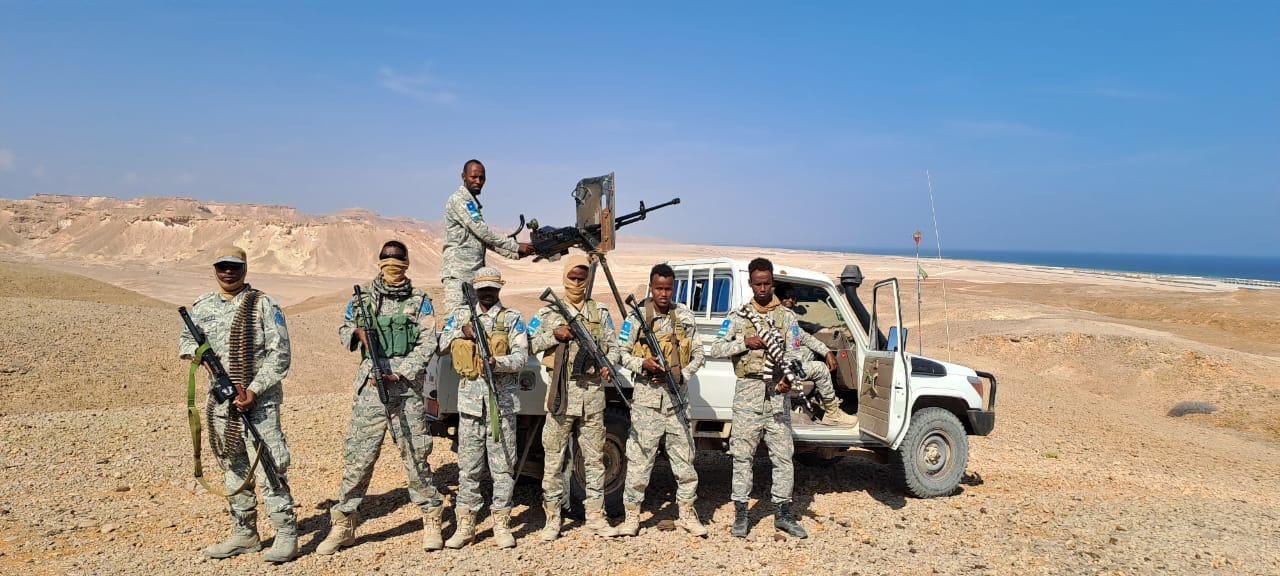
He would spend five months in captivity, until September 29, when the Puntland Maritime Police Force (PMPF), an anti-piracy force funded by the United Arab Emirates, came to the rescue.
Five crew members were dead by the end of the two-hour gun battle. One survivor told Pakistan’s Express Tribune that five of the forty-one pirates aboard were killed.
Bin Shams survived with four bullet wounds.
The ordeal aboard the Honour was something from the heyday of Somali piracy in the first decade of this century, when small bands of heavily armed men in tiny boats captured hundreds of internationally flagged cargo ships and held their crews for millions in ransoms.
Back then, Somali pirates hijacked forty-nine ships in a single year, took more than one thousand seafarers hostage, and collected an estimated $238 million in ransom payments.
The total cost to the world economy was astronomical, though difficult to calculate.
Frantic efforts to guard against pirate incursions were expensive—as much as three billion dollars went just to rerouting ships thousands of miles around the African continent—but they worked. Naval patrols and armed guards on ships eventually brought piracy under control.
For a time.
Politically fractured since a 1991 civil war that never resolved, Somalia sits beside one of the world’s most important and strategic shipping routes. Vessels moving between Asia and Europe often pass through the Gulf of Aden, between Somalia and Yemen, on their way to the Red Sea and Suez Canal.
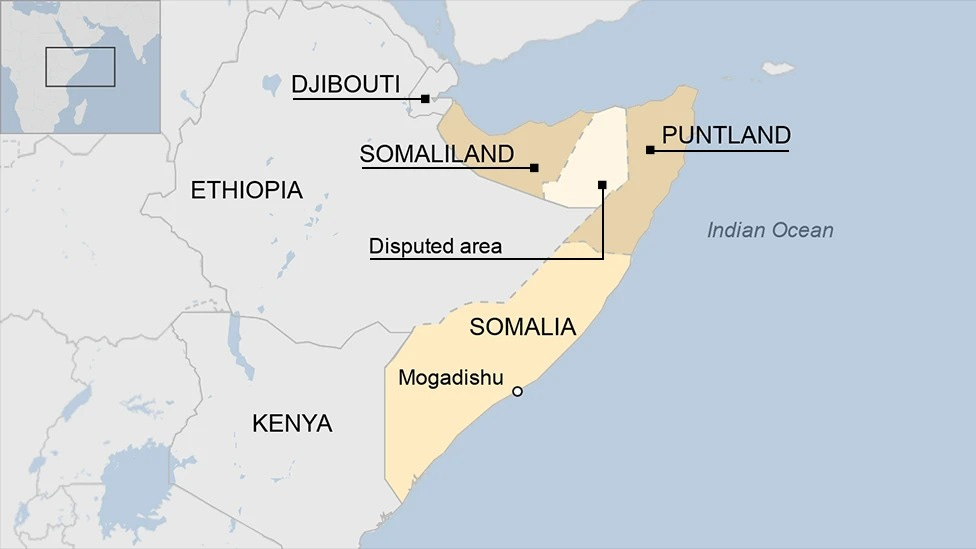
Three years after the start of the Gaza war and subsequent US strikes on Yemen and Iran, Somalia is now crowded with spies, special forces, and foreign patrons all jostling for influence. The country is split unevenly among the African Union troop-protected central government in Mogadishu, the rural south held by al-Shabaab, al-Qaeda’s Somali affiliate, and Somaliland and Puntland, territories in the northwest and northeast.
Now, an uneasy confluence of climate and geopolitical factors is inviting back an old problem.
From January through September, Atalanta, the EU’s anti-piracy naval mission, logged twenty-seven incidents of piracy. At least ten ended in hijackings, including six merchant ships; reported ransoms so far total around $6 million.
A Chinese fishing vessel that netted seven figures for pirates in the new year was thought to inspire copycats. Whether or not that was true, it was the case that a late monsoon left seas unusually placid—and more vulnerable to piracy.
At the same time, the Mideast wars have sown chaos and diverted resources from Somalia’s coast to the Red Sea and Strait of Hormuz while the PMPF has become entangled in Somalia’s battles against al-Shabaab and ISIS, the infamous terror group.
The Houthis, an Iran-backed militant organization that controls much of Yemen, have attacked commercial shipping in the Red Sea over what they claim is solidarity with Palestine.
And the Houthis seem to be working with pirates.
“Piracy reemerged…in tandem with Houthi objectives,” Dimitris Maniatis, CEO of Marisks, a company that provides intelligence and risk assessment and protective services to shipping companies, said.
And there is already evidence that the Houthis have been building relationships with armed groups across the Horn of Africa.
In August, The Century Foundation, a US think tank, published an investigation into expanding Houthis networks across the Horn of Africa. Relying on interviews, ship-tracking data, and satellite imagery, researchers found Houthi operatives in Port Sudan, weapons moving in both directions across the Red Sea, and the use of Djibouti as a logistics hub.
In a February 2025 report, UN sanctions monitors reported information from a member state that al-Shabaab representatives had met with the Houthis at least twice in 2024, reportedly asking for advanced weapons and training. “In return,” the report said, “al-Shabaab was to increase piracy activities within the Gulf of Aden and off the coast of Somalia, targeting cargo ships and disrupting vessel movement as well as collecting ransom from the captured vessels.”
Al-Shabaab was reported to have received some small arms, light weapons and technical expertise from the Houthis. But the monitors described the relationship as “transactional or opportunistic, and not ideological.”
It’s a level of networking reminiscent of Hezbollah, the Iran-backed Lebanese group that grew from an Iranian proxy into a patron of other militias across the region. The Houthis, in other words, may be turning themselves from one spoke of Iran’s network into a hub. “Islamic Revolution 2.0…Hezbollah on steroids,” said Mohammed al-Basha, a Yemeni-American analyst with Washington, DC-based advisory Basha Report.
Incidents continue to suggest collaboration between Houthis and pirates.
Three of this year’s six merchant hijackings happened near Yemen. On May 2, pirates seized the tanker Eureka while it was anchored off the Yemeni coast.
According to Jay Bahadur, a former UN sanctions monitor and author of The Pirates of Somalia, writing for the Global Initiative Against Transnational Organized Crime, Yemenis may have tipped off the pirates and even participated in the boarding.
A Yemeni military intelligence report obtained by the group alleged that the pirate gang later met Houthi officials to coordinate attacks on shipping, though Bahadur could not independently verify that allegation.
Meanwhile, the Royal United Services Institute, a British think tank, has shifted its assessment. In 2024 it saw no clear link between the Houthis and pirates. But this September it described Houthi, al-Shabaab and pirate operations converging, and said Houthi involvement in piracy “may well be more direct.”
What is clear is that Somali piracy has returned at a time when regional wars have stretched naval forces, Somalia’s security institutions are divided, and the Houthis are expanding their relationships with armed and criminal networks across the Red Sea.
Maniatis said the same men move between smuggling, piracy and militancy. The networks that once shipped charcoal to the Gulf now smuggle khat, migrants and weapons, and crew pirate skiffs. Some of these networks also work for al-Shabaab.
“The distinction between one action and the other becomes very blurry,” he said. “It’s all the same people.” He described pirates as “freelancers” and “contractors” who will work for whoever pays. He pointed to the Central Park, an Israeli-linked tanker that Somali pirates tried to seize in November 2023.
“What we all figured out was that the Houthis sent out like a memo saying…if you can bring us the Central Park, we will give you whatever, a million dollars, let’s say,” Maniatis said. Asked whether there was any evidence of such a memo, he said no, “not in the sense that you mean.” Still, he added, “I see no reason why the Houthis and the pirates would not cooperate if it serves their interests.”
Puntland’s own security services go further.
In December 2025, Mohamed Musa Abulle, PMPF’s deputy director of intelligence, said some pirate groups had acquired state-of-the-art GPS devices and weapons from the Houthis and their allies in Yemen, and that security agencies believed some pirates had trained there.
“This GPS device allows pirates to accurately track the routes of commercial vessels,” he told Somali reporters. “The new technology has made it much easier for them to plan attacks far from the Somali coastline.”
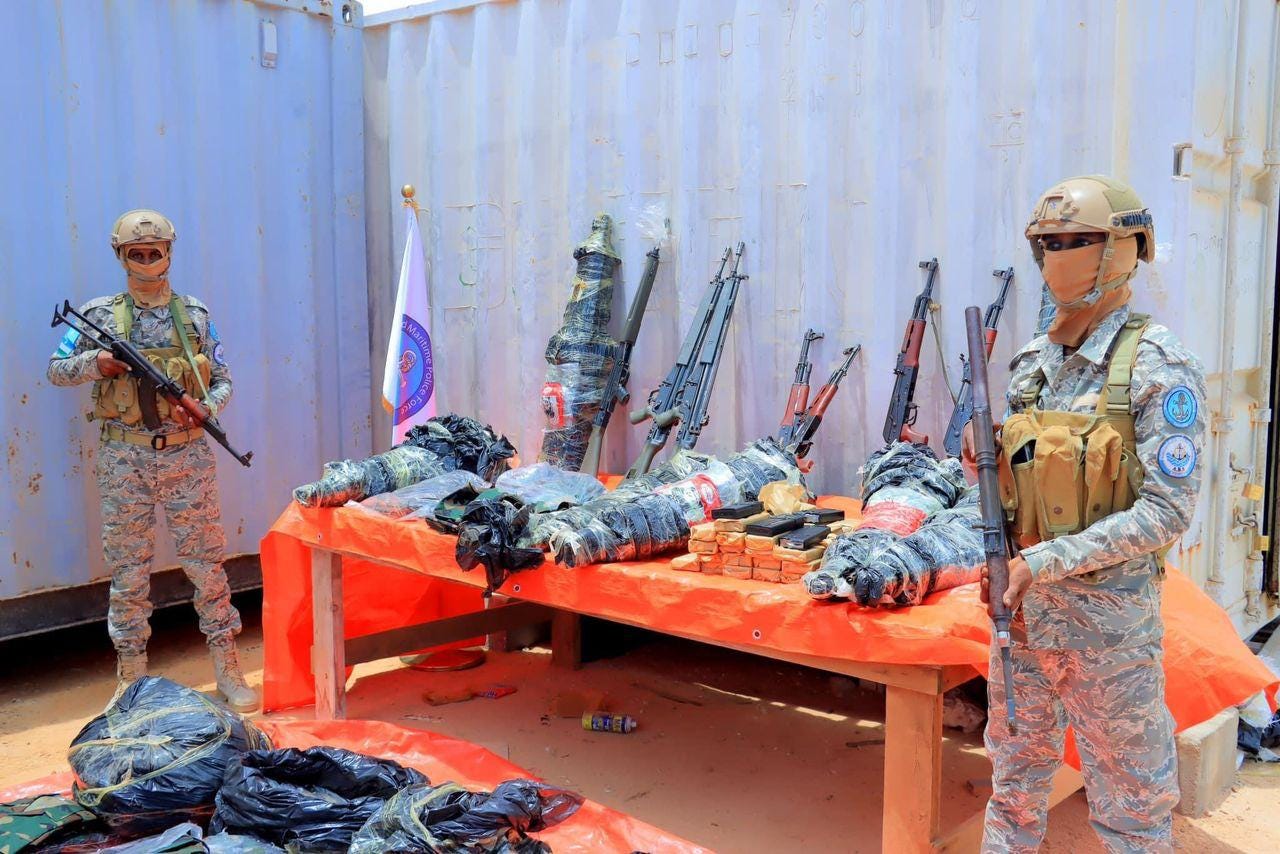
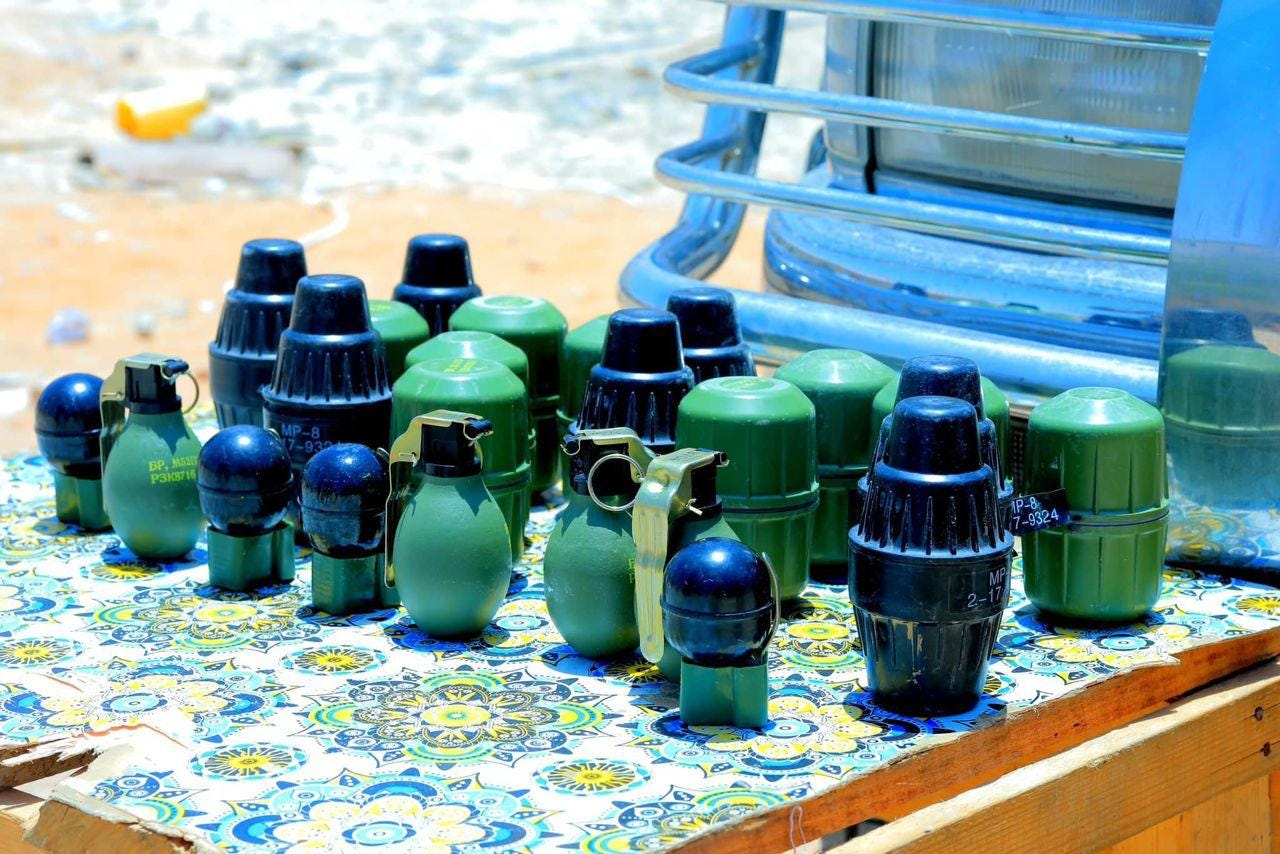
Puntland’s security forces have also intercepted suspected weapons shipments. In 2024, they seized a shipment of suicide drones that officials said had come from the Houthis and were destined for al-Shabaab. In December 2025, the PMPF stopped a boat near Eyl carrying bomb-making chemicals and arrested five Somalis and two Yemenis.
“The Houthis are supplying high-end, sophisticated weaponry to al-Shabaab and the pirates as well,” said Captain Ali Garoon, a PMPF operations officer. The Houthis have also supplied al-Shabaab with drones, he said, and trained its fighters to use them.
But Garoon would not show any evidence. “We cannot disclose any sensitive information or sources,” he said. The PMPF has detained Yemenis, but for smuggling weapons, not piracy. Atalanta, whose crews board pirate skiffs, said it had found no evidence of Houthi equipment or ties. “However, we cannot rule out this relationship,” said Captain Garcia, chief of staff at Atalanta’s operation headquarters.
Part of the problem is philosophical: Who counts as a pirate?
To al-Basha, the Yemeni-American analyst, the same man “could be in the day a fisherman, at night he could be a smuggler,” and at weekends a pirate, or a fighter for al-Shabaab. And the Houthis, he added, deal with whoever holds the coast: “It’s more, where do you live? What’s your base?” Even so, “I think there’s a smoking gun linking the Somalis to the Houthis,” he said. His evidence: for the first time, Somali pirates are hijacking ships near the Yemeni coast, which means, he said, they are getting intelligence and fuel from the Yemeni side. Research he has done with colleagues found Houthi warehouses in parts of Puntland “notorious for piracy.”
What would the Houthis gain? One answer is distraction. A few shots at a passing ship, Maniatis said, and naval attention shifts, “leaving another area very exposed.” Garoon agreed. Pirates do “try to distract the forces who are patrolling,” he said.
They don’t even need to be real pirates—whatever that means—Maniatis said, just “poor dudes on a skiff with weapons.”