



Imagine this: my camera man, Jake Burghart, and I are walking through a garden in Tehran with all our gear, cameras rolling. We’re on our way to cover an anti-war rally happening in the city center. Just as we’re nearly through the garden and on the street, black clad men emerge from around the corner. They’re holding machine guns, they’re in combat boots, and you can’t really see anything but the whites of their eyes. A spectacularly intimidating getup. We quickly realize who we’re dealing with and tilt the cameras down.
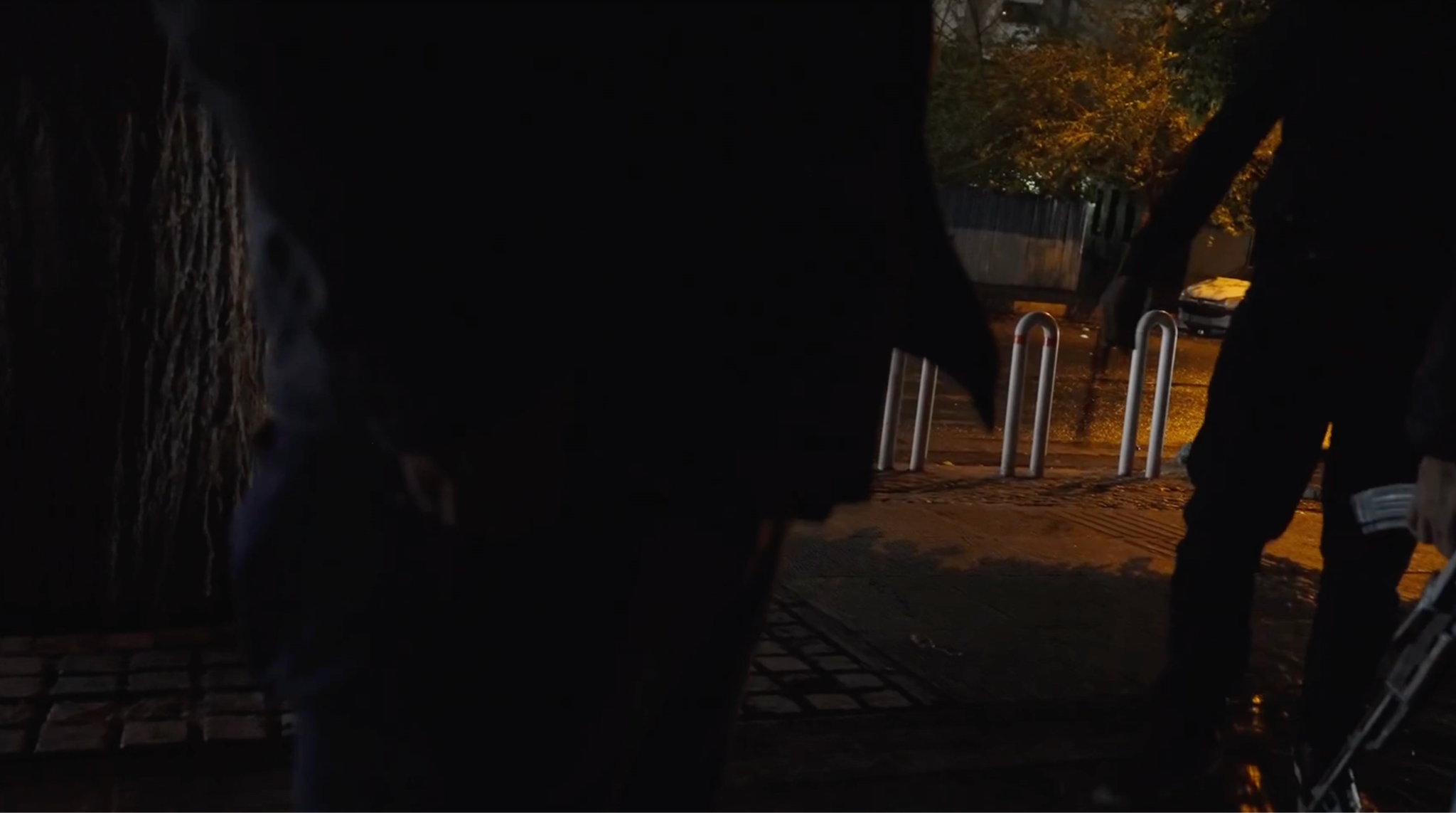
These men aren’t any old police officers or soldiers. This is the Islamic Revolutionary Guard Corps (IRGC). The mafia of Iran. The guys you never want to run into…
When the war broke out more than two months ago, my reaction was the same I have to every war: this is very bad. For years, Vice News has reported on the brutality of the Iranian regime: the repression, the crackdowns, the everyday reality of living without freedoms many of us take for granted. Before the war, a crackdown on anti-regime protestors killed thousands of Iranians. But none of that changes my belief that war is always the worst case scenario.
Most Western coverage has focused on military strategy and the Trump administration’s justification for the strikes the U.S. launched alongside Israel, including the core argument that Iran must be prevented from obtaining a nuclear weapon. Far less attention has been paid to what life in Tehran actually looks like right now. That’s partly because, for Western journalists, reporting from inside Iran has become nearly impossible.
So when we had the opportunity to travel to Tehran, I knew it was important to get on the ground and speak directly with Iranians about their experience of the war.


I also wanted to speak with government officials to better understand Tehran’s position on its nuclear program. If, as Trump says, the conflict revolves around Iran’s nuclear program—with the U.S. claiming Iran is pursuing a weapon and Iran insisting the program is for energy and development—then in theory, some kind of compromise should be possible.
I had never filmed in Iran during an active conflict, so I wasn’t quite sure what to expect. Being stopped by the IRGC two hours into our trip was an unpleasant experience to say the least. I’ve never gotten used to interactions like these. Iran has always felt like a police state, but now it feels like a police state on overdrive. But you have to be prepared for this when you’re reporting in an authoritarian country. Risk is part of the calculus.
As we ventured on to cover one of the city’s nightly anti-war rallies, we found the streets filled with traffic, the stores at the grand bazaar were full, and construction underway on luxury apartments. It was an unbelievable dichotomy. Despite the fact that the U.S. and Israel have carried out thousands of strikes on the country, Tehran felt, at least on the surface, surprisingly normal. Unveiling unexpected details like these is why it’s always been important to get on the ground- there’s a broader story that the mainstream media can’t capture.


Internet access in Iran is heavily restricted, but using local SIM cards, we were able to livestream portions of our visit. The familiar imagery of Iranian demonstrations was everywhere: flag waving, chants of “Death to America,” “Death to Israel,” and “Death to the Jews.” There were signs maligning Reza Pahlavi, son of the last shah of Iran, who- from exile in the United States- has become a kind of opposition figurehead. Teenagers crowded around booths playing podcasts about martyrdom. Vendors sold miniature Shahed drone keychains as merch.
Yet the people we spoke with were consistently friendly, polite, and eager to talk. That’s something you come to realize when you report in authoritarian places like Iran, North Korea, or Cuba: the people are not the regime. They wanted to connect, and to share with the world their frustrations, fears, and their hopes for peace.
As we filmed, police stopped us repeatedly to check our paperwork, but our fixers managed to smooth things over each time. We were in Iran legally as journalists, and because the regime controls virtually every aspect of foreign reporting, that meant the regime had allowed us to be there. Thus the people I was able to speak with on camera were overwhelmingly anti-war and supportive of the regime. Those that hold different opinions were unlikely to risk speaking candidly to journalists.
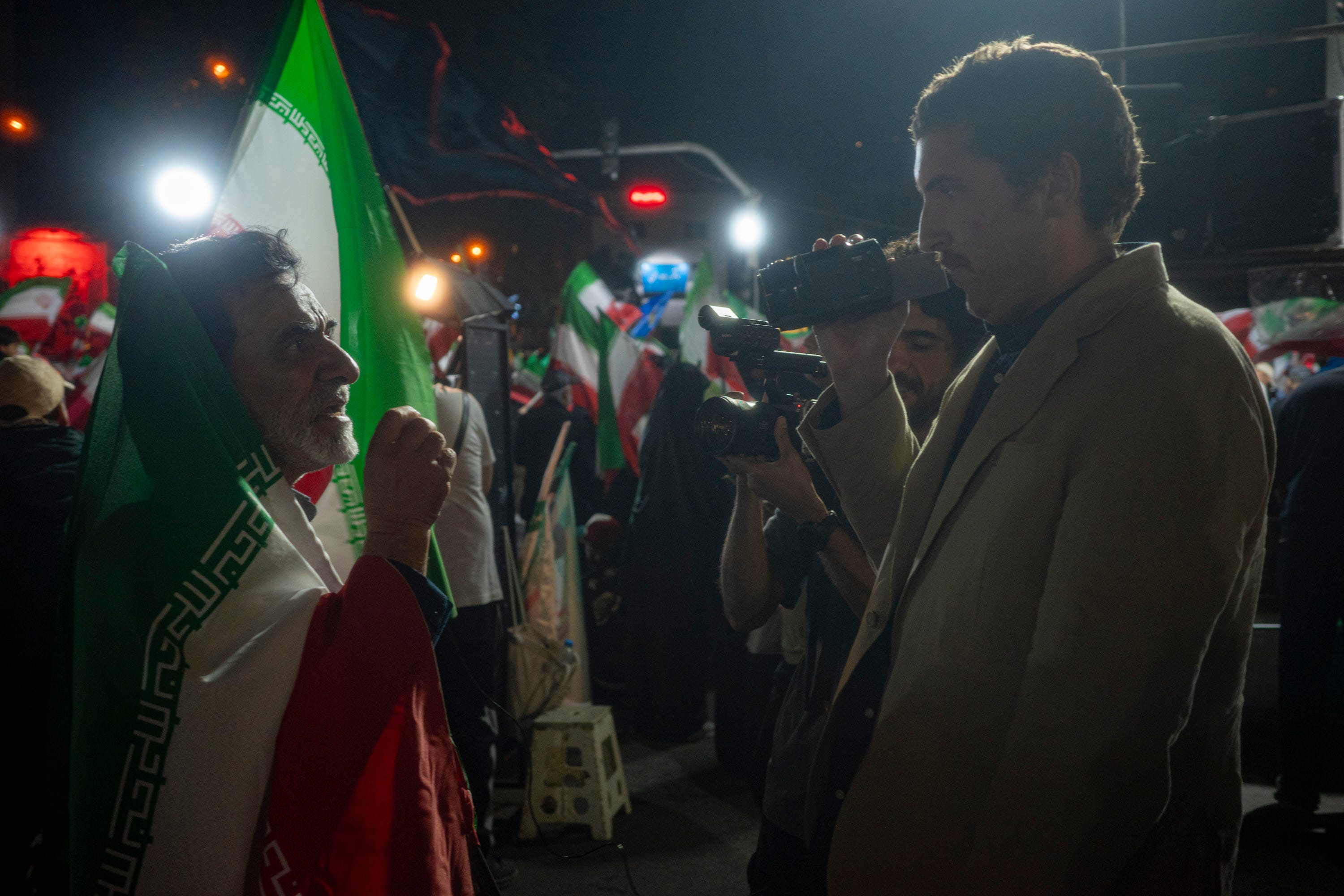
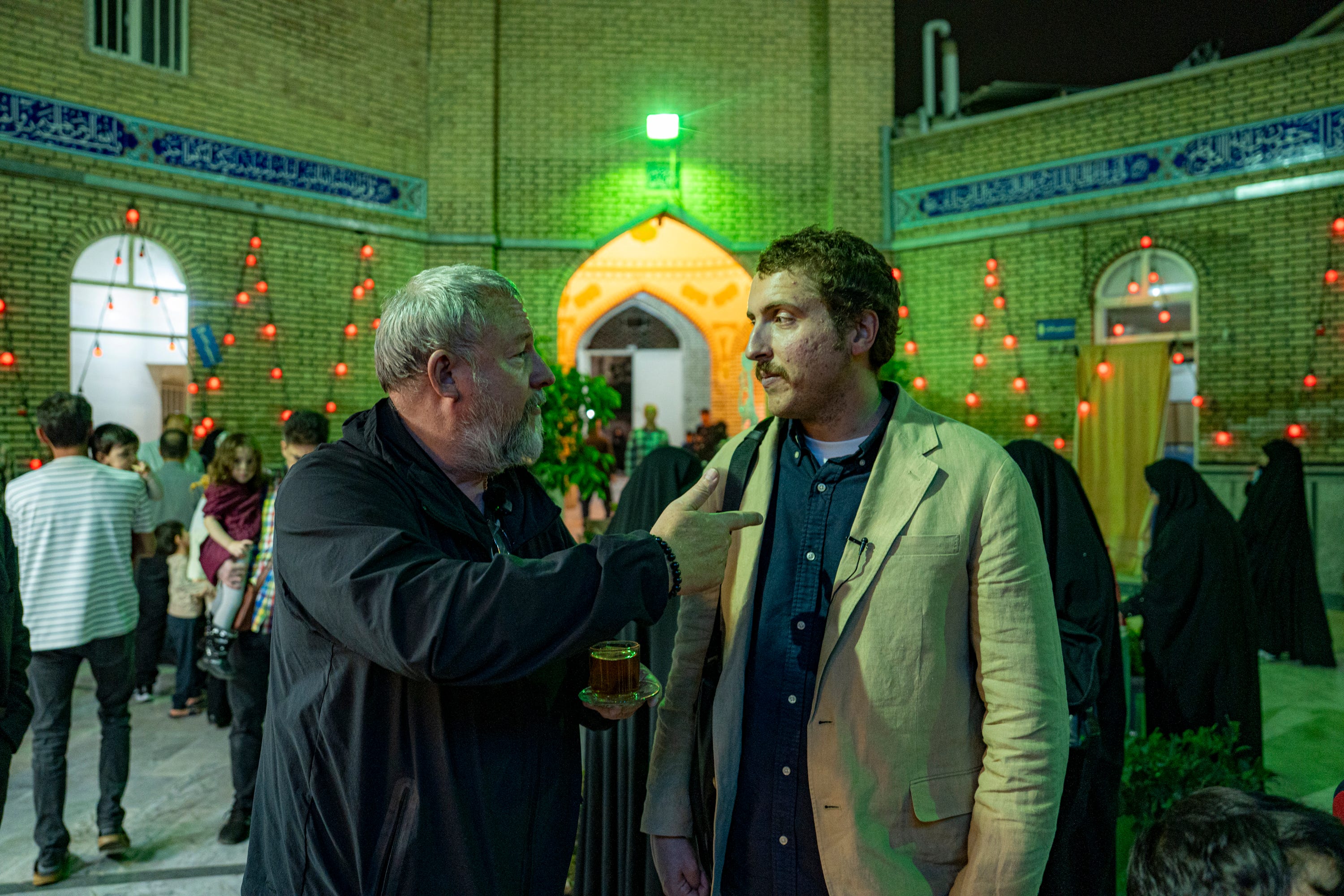
Still it was incredible to get the raw opinions of an important proportion of Iranian people. One night, when our friend Andrew Callaghan of Channel 5 News joined us at a rally, I met a man who surprised me. He approached me speaking perfect English and explained that he had spent part of his childhood in Ottawa — the same Canadian city where I grew up. With one child on his shoulders and another holding his hand, he came across as warm, thoughtful, and completely ordinary. But when I asked him about the war, he told me he actually wanted America to attack again. He was “waiting for it.” He explained that he believed another confrontation would allow Iran to finally “finish the job” — by which he meant forcing the United States out of the region entirely, leaving Iran and its neighbors to determine their own future without Western interference. I was stunned by how genuine he came across. This was a happy man.
Later in the trip, I sat down with the spokesperson for the Ministry of Foreign Affairs, Esmail Baghaei. We discussed the crisis in the Strait of Hormuz, the risk of regional escalation, and Israel’s role in the conflict, before turning to the central issue: Iran’s nuclear program. I asked him a question that many Americans would probably ask. If Iran’s nuclear program is truly peaceful, why not abandon it in exchange for a deal with the United States? Iran sits atop enormous oil and gas reserves. Why not focus on fossil fuels, or solar, or wind energy instead?
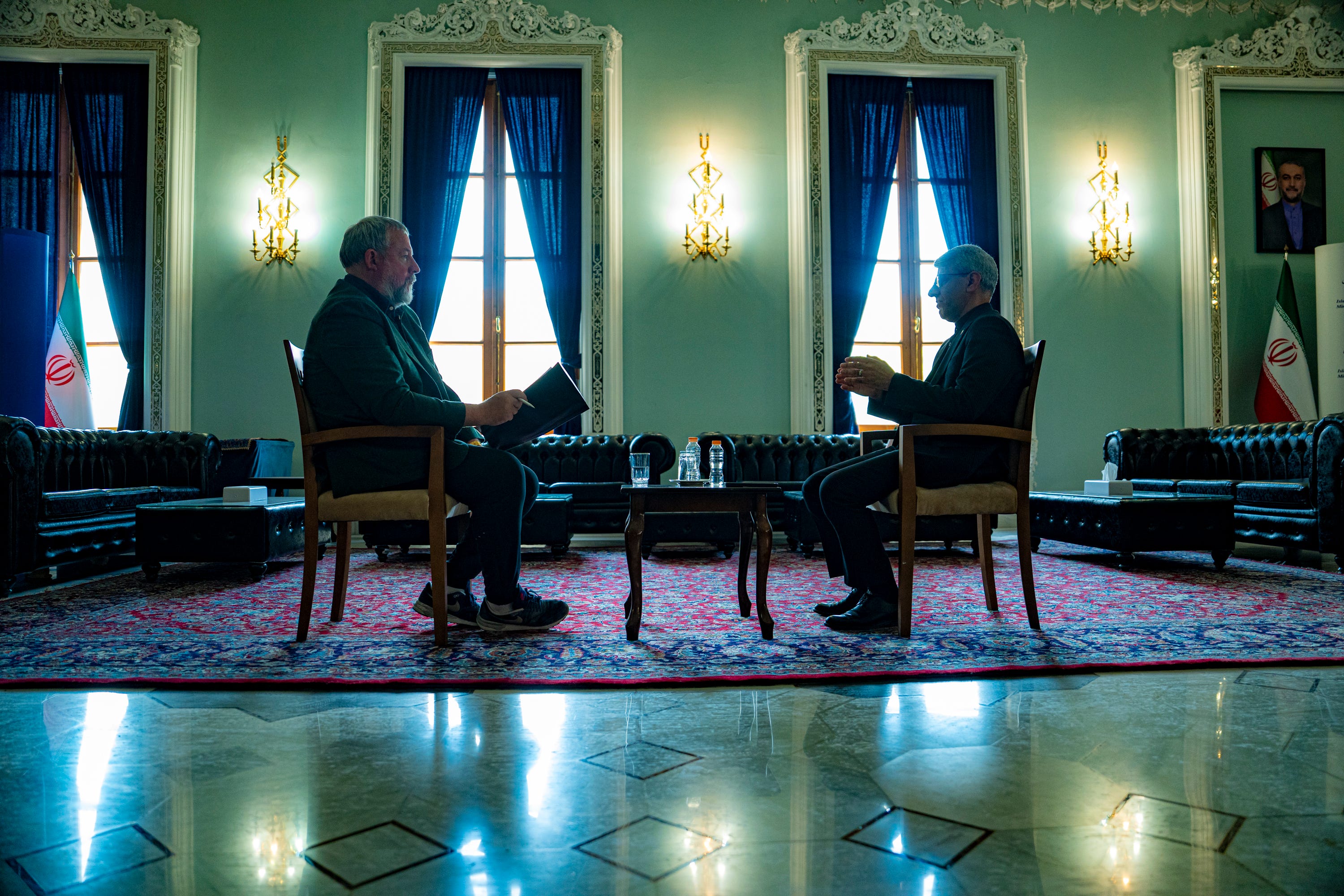
Baghaei rejected that premise. Iran, he argued, is not attempting to build a nuclear weapon but should continue to pursue nuclear energy. Critics point to Iran enriching uranium to near weapons-grade levels, but Baghaei insisted the program is about “development” and “welfare.” He reminded me of something I had learned while visiting Iranian nuclear facilities with the IAEA last time I was in Tehran: before the Islamic Revolution, it was American institutions that encouraged the Shah to pursue nuclear energy, with U.S. and European companies helping build Iran’s first reactor. He also pointed out that several Gulf states with enormous fossil fuel reserves maintain civilian nuclear programs of their own, and that the world is pushing countries away from dependence on fossil fuels for their environmental impact.
I was relieved to emerge from Tehran with a mission accomplished: capturing perspectives on this conflict that hadn’t presently been shared. I understood the impasse between Washington and Tehran more clearly than before. The United States sees a regime inching toward nuclear weapons capability and says that military intervention is necessary to stop it. Iran sees itself as a sovereign power and says it’s being denied rights that other countries already possess. And caught between those two positions are ordinary Iranians, waiting to see what happens next.
In partnership with Adobe Acrobat, we’re opening up our reporting from Iran. Using PDF Spaces, you can dig into original documents, research, and source material—so you can follow the story the same way we do.
Wow! Now that's on the ground reporting. A lot to unpack; thank you!
If we--the US and Israel--fully resume the war, it will be a disaster especially for Iran, as civilian infrastructure will likely be the primary targets. Water treatment plants, bridges, factories, power plants, etc. And Iran will hit Gulf States' oil production infrastructure, deepening the descent into a global recession.
Excellent report. Thank you!