



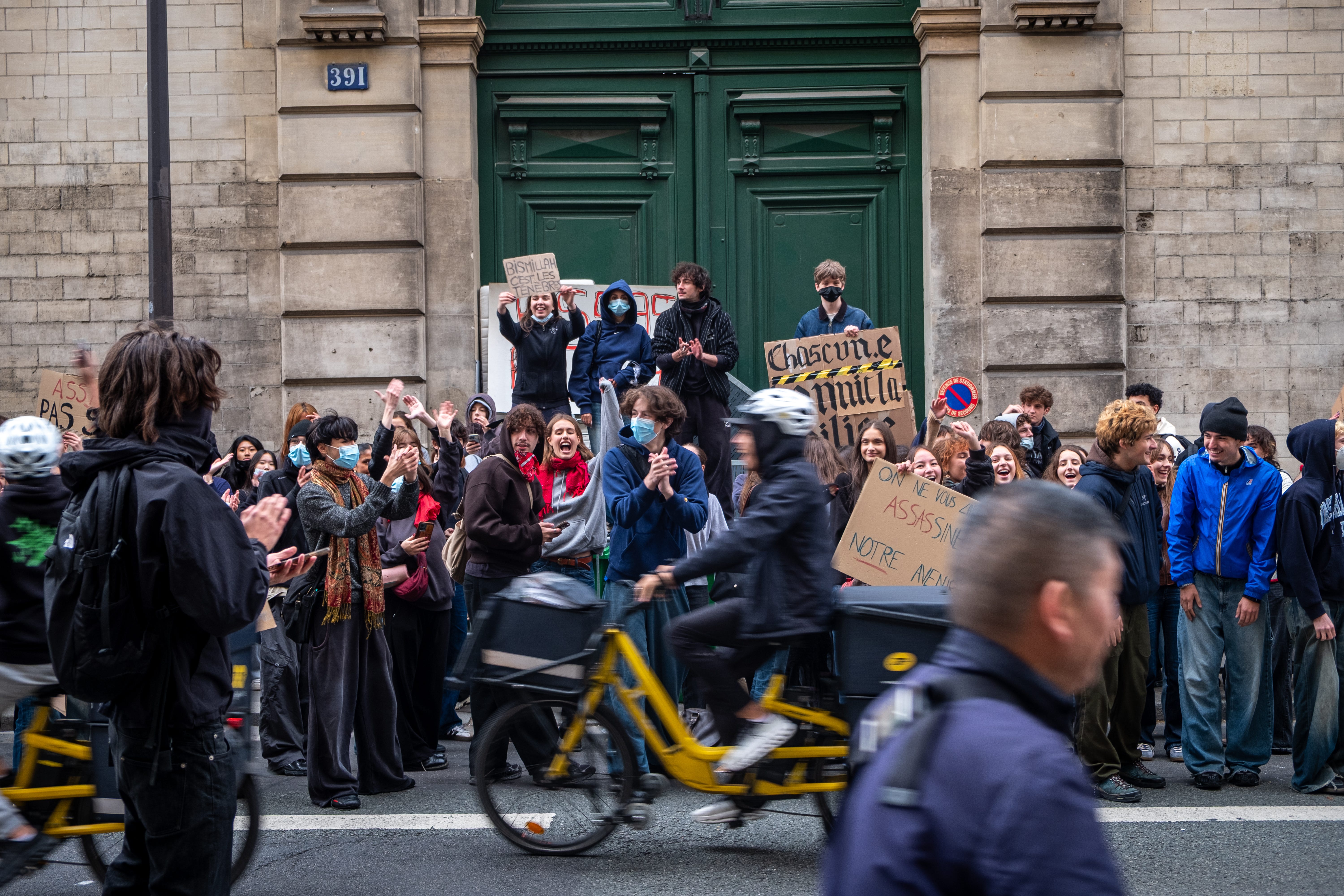
“Puberty leads the people.”
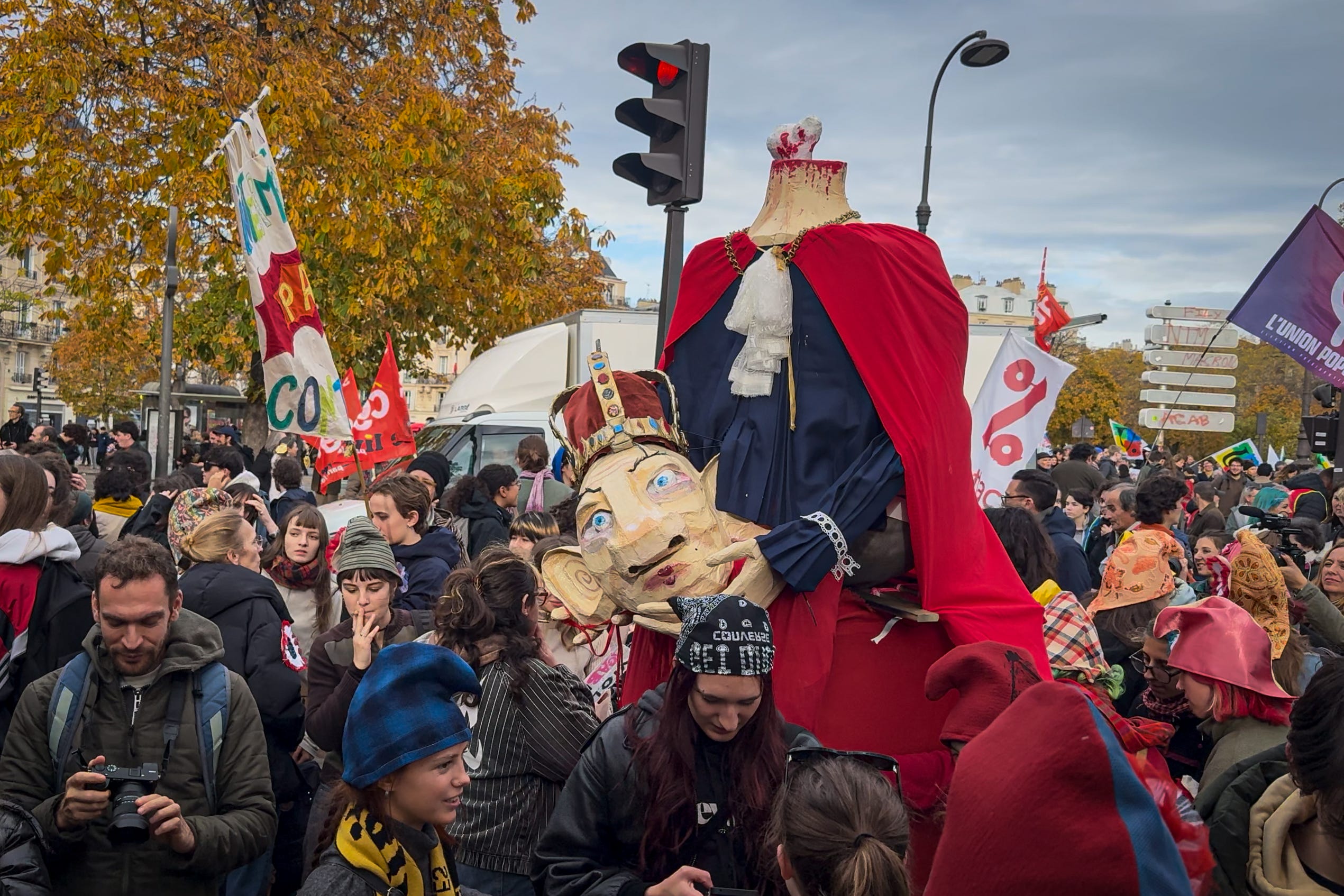
The slogan rises above a sea of protesters gathered at Place de la Nation in Paris. Thousands have turned out for another day of demonstrations, many of them teenagers furious about the state of their schools and increasingly, their country.
“In many high schools, the walls are crumbling down,” said Charles, 19. “In some classrooms, there are rats.”
There aren’t enough teachers, he said. Some school buildings lack adequate heating or air conditioning.
“It’s impossible for us to study in these conditions. That’s why we demonstrate today.”
Alice, 17, stands outside her high school, which has been forced to close for the day. She has a message for French President Emmanuel Macron.
“Towards the end of his term, he’s making it pretty clear that he doesn’t really care about us, especially schoolchildren, even though we’re the future of France. Maybe he should start paying a little more attention to the French people.”
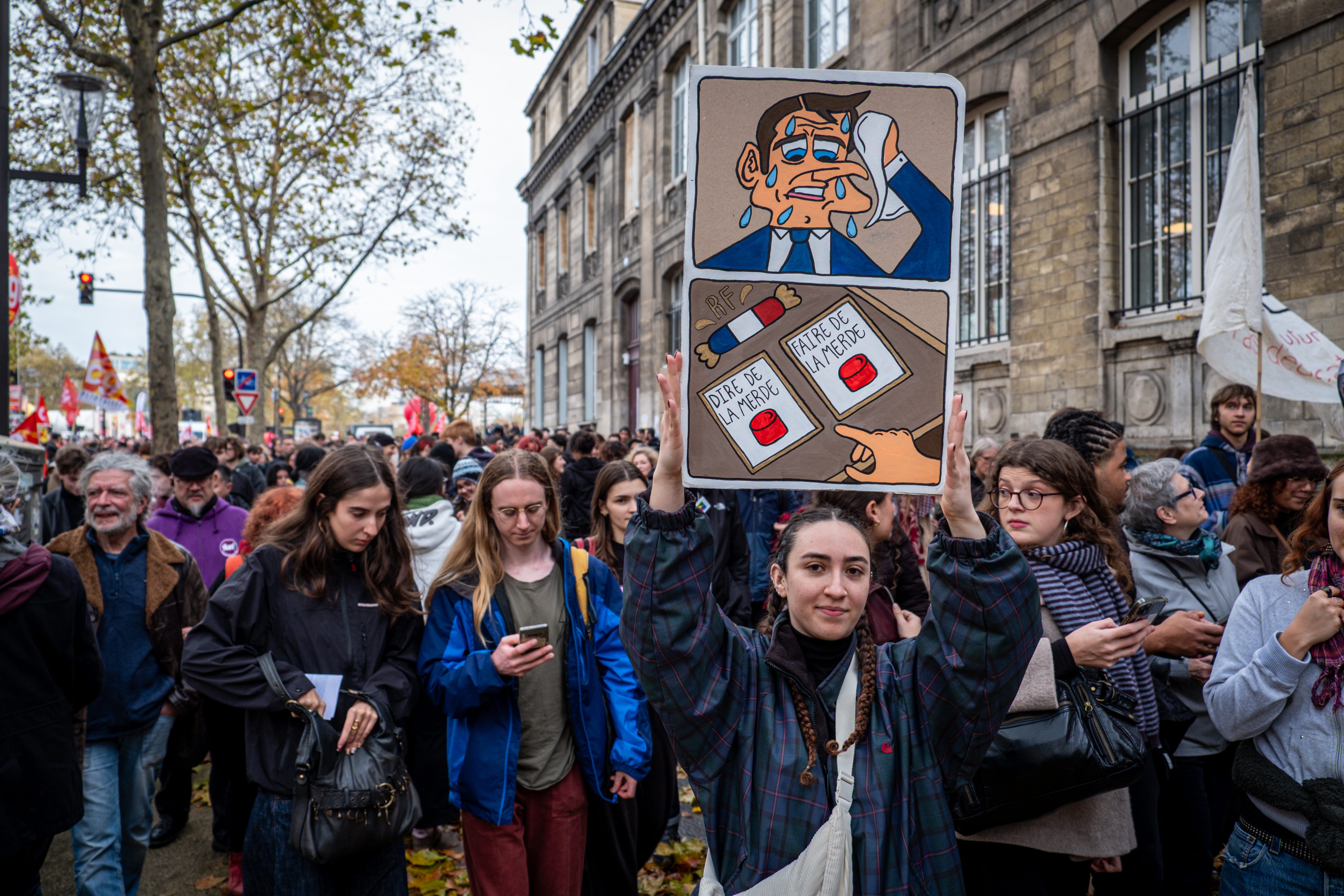
Since September, protests have swept across France, beginning with anger over education and expanding into a broader revolt against the political establishment.
And the mood has spread. People have taken to the streets across Europe: initially over education in Italy and Austria; the housing crisis in Spain; government austerity in Belgium; and a slew of grievances in Germany, including the possible return of military conscription.
Each movement has its own local roots. But across the continent, all share a motivating fear familiar to anyone who remembers Occupy Wall Street: that today’s young people will have fewer opportunities than their parents.
What began as scattered demonstrations is now a continent-wide expression of dissatisfaction with the political status quo.
And with Europe facing consequential elections, that dissatisfaction could help determine the continent’s political future.
The question is whether the young people demanding change will get the kind they want — or whether it will backfire.
THE POLITICS OF PROTEST
“This student protest morphed into a protest against the rising cost of life,” Emma, 35, said at the demonstration in Paris last week.
“We want social justice. The rich are making money off the backs of the poor. If they want to keep getting richer, they’re going to have to give us more. Otherwise, we’re just going to die and they’re going to be left with nothing.”
Many of the protesters’ demands — from better-funded public services to more affordable housing and greater economic equality — are traditionally associated with the left. But as demonstrations grow, so does the risk that the unrest will turn public opinion against the protesters themselves.
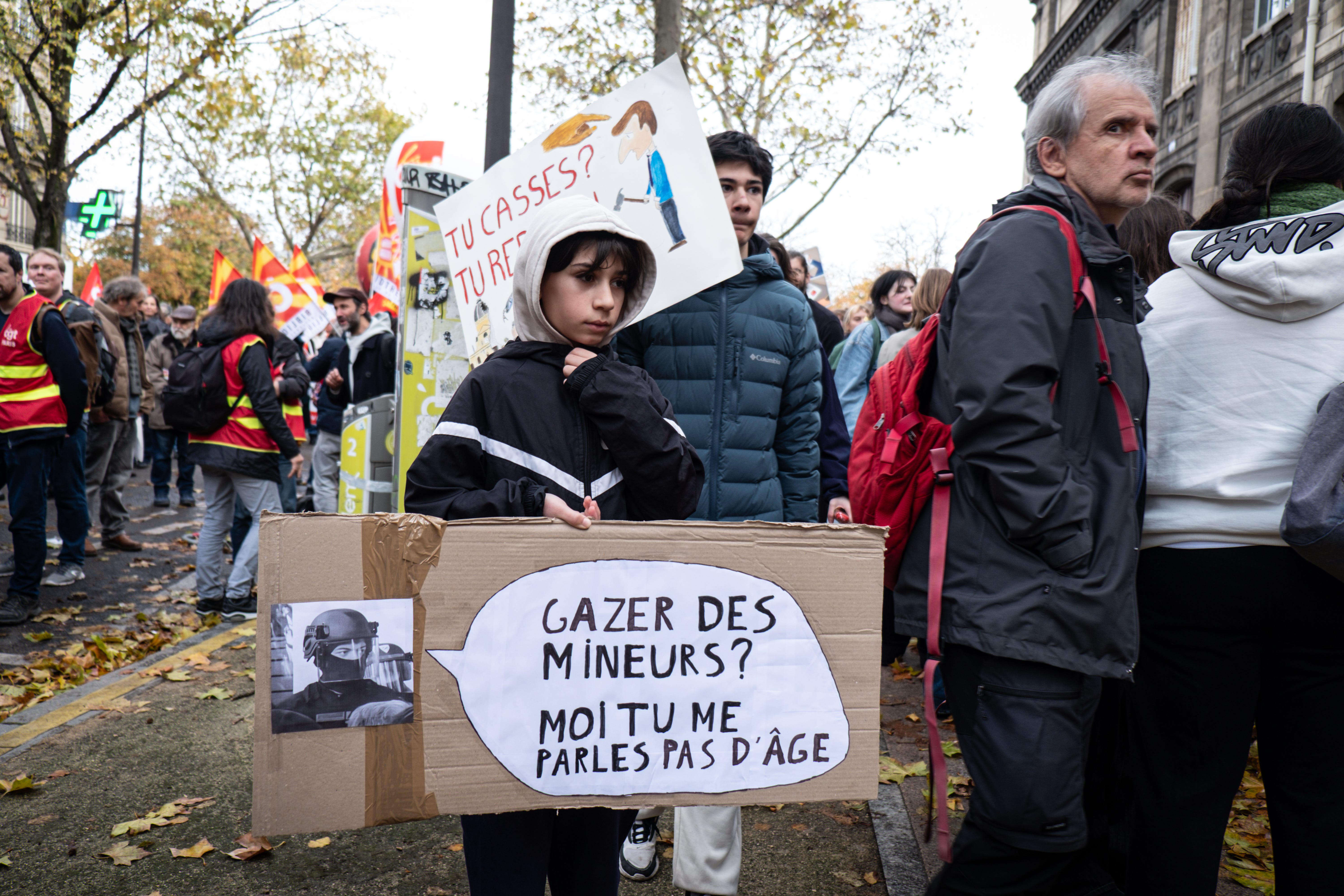
On October 17, confrontations between protesters and police erupted in several French cities. Government buildings were vandalized, shops looted and riot police deployed.
According to the Paris police prefecture, more than 300 shops in the capital were damaged. Much of the violence came from groups operating outside the official marches, rather than the vast majority of peaceful demonstrators.
In Limoges, France, masked men linked to the protests torched the city’s historic 19th-century neo-Renaissance town hall.
It was an arresting image of destruction, and politically problematic.
For protesters, these incidents risk overshadowing the grievances that brought them into the streets.
For Europe’s far right, they could provide an opportunity.
“I wonder whether [anti-immigrant populist] Marine Le Pen even needs to run a campaign,” one analyst posted alongside video of the burning building in Limoges. “Some people seem determined to campaign for her.”
The fear is that unrest associated with the left could make far-right parties look more attractive to voters seeking order.
Some are even questioning whether some of the violence has been deliberately stoked for political ends. “It cannot, unfortunately, be ruled out that amid the escalation of violence in France, saboteurs recruited by Russia may also have played a role,” Politico’s Hans von der Burchard noted. Several countries, including Italy, are investigating whether Russia has played a role in fanning the flames.
Such suspicions reflect just how high the political stakes are, especially at this moment.
EUROPE AT A CROSSROADS
Over the next several months, Europe faces a succession of elections that could rapidly reshape the continent’s political direction.
Further victories for hardline nationalist parties could shift the balance of power across the European Union toward politicians who want to weaken its supranational institutions and return authority to national capitals.
In France, Marine Le Pen’s far-right National Rally represents one of the most significant challenges to the country’s pro-European political establishment ahead of the presidential contest. That election is in April.
This Sunday Spain goes to the polls. Prime Minister Pedro Sánchez faces pressure from a right that includes the nationalist Vox party, which has transformed the country’s political landscape over the past decade. If Sánchez loses the election, the EU will lose one of its last remaining left-wing leaders.
And far-right parties continue to wield influence across Europe. In Italy, Giorgia Meloni’s Brothers of Italy is the leading party in the governing coalition. In Poland, Jarosław Kaczyński’s Law and Justice is seeking a return to power. And in Germany, Alternative for Germany is polling in first place.
The implications extend beyond individual national elections.
The center-right European People’s Party has dominated EU politics for more than two decades, while the center-left Party of European Socialists has seen its influence wane, increasingly playing a secondary role in the bloc’s centrist governing arrangements.
A further nationalist surge could fundamentally change that balance.
As more national governments fall into the hands of parties hostile to deeper integration, the European Council could become increasingly resistant to ambitious common European policies. Gains in the European Parliament could reinforce that shift.
The result would be an EU increasingly governed by politicians who question the value of the integration project itself.
But nationalist politicians are responding to the same underlying reality as the protesters: “Europe is doing badly,” as one respondent to a recent European Council on Foreign Relations (ECFR) survey put it.
Pessimism is high. Europe is suffering from an undeniable leadership vacuum as it endures weak economic growth, geopolitical insecurity, and humiliations inflicted by America. It is no wonder that the Europe-wide protests are so vague and existential in their angst.
But that anger could have unintended consequences.
WHAT KIND OF CHANGE WILL EUROPE GET?
Amid the images of burning buildings and growing anxiety about nationalist electoral victories, an important distinction risks getting lost: Most Europeans do not want the union to be governed by the far right. In fact, 62% of respondents are very worried about their rise.
And that survey by ECFR also found that stereotypes about far-left protesters being anti-EU are not true.
In France, far-left leader Jean-Luc Melenchon, currently polling second behind Le Pen, has long been deeply critical of the EU. Yet 91% of his party’s voters say they consider themselves European.
That suggests a more complicated picture than the familiar divide between pro-European centrists and anti-European radicals. Many voters drawn to anti-establishment movements may not be rejecting the European project itself, but rather the political leaders and institutions currently shaping it.
The protesters don’t seem to know exactly what they want, but they know that the way things are being run right now is not working.
That creates an opportunity for nationalists. They have a clear answer: take power back from Brussels, reinforce the nation-state and reverse European integration.
But it also creates an opening for pro-Europeans. Rather than dismantling European institutions, they could argue for giving them the power and resources to address the problems that national governments have struggled to solve.
Their task may be more difficult, however. While nationalists promise to restore control by bringing power back to national capitals, pro-Europeans must convince voters that sharing more power at the European level would actually give them greater control over their future.
The political contest, then, is not necessarily between change and continuity. It is between two very different visions of change.
And unless pro-Europeans can make their case, voters angry at the establishment could end up empowering nationalist parties, even when they don’t share those parties’ hostility toward European integration.
WHO SPEAKS FOR EUROPE’S PROTEST GENERATION?
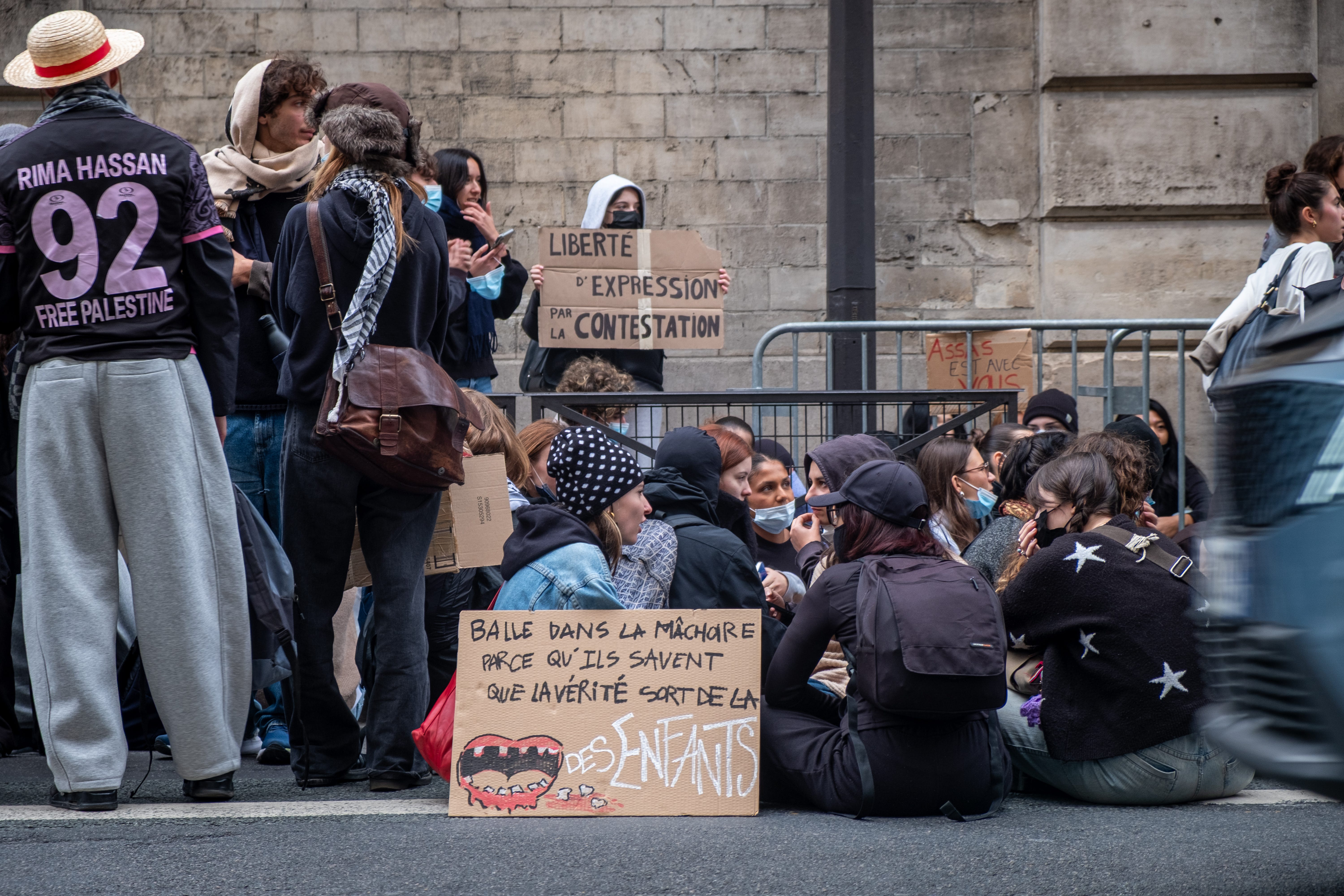
Back on the streets of Paris, demonstrators are marching past boarded-up storefronts and buildings still bearing the scars of earlier unrest.
Some carry signs invoking the French Revolution. Others wave antifascist flags or denounce the president.
Students want functioning schools. Workers want better wages. Young people want affordable housing and a future that offers more security than the one they see ahead of them.
What is less clear is which political movement will translate those demands into a coherent program for governing France — or Europe.
For many protesters, the immediate objective is simply to force politicians to listen.
“We’re not stupid or unrealistic,” said Anaïs, 21, as she marches toward Place d’Italie. “We have very fair demands. We just need to be listened to and taken seriously.”
She said demonstrators will continue until they receive a satisfactory response.
But as France and its European neighbors prepare for crucial electoral contests, time may be running out for the political establishment to offer one.
Europe’s young protesters are demanding a different future. Their anger could fuel a nationalist backlash, strengthen the case for deeper European integration, or give rise to political movements that have yet to fully emerge.
None of those outcomes is inevitable.
Europe’s young people are demanding a revolution. The question is who will lead it — and in which direction?
Follow Dave on Substack where he writes about European and US politics.
Europe has been far too liberal in the past, time for the conservatives to take control. It’s obvious mass immigration has been a mitigating factor especially the lack of funding for essentials for the French people, like education. Socialism does not work and I pray that it doesn’t reach United States. Liberals are far too empathetic to those who claim that have nothing and no opportunity to advance. Everybody has the opportunity.